
Interline Chronicles
2025
- ongoing
Research-based participatory project, site-specific intervention
The project was launched during a residency organized by the Sharjah Art Foundation.
Over the course of two months, I interacted with residents of Kalba (UAE) and gathered material that formed the basis of the project.
“Preface” is the first chapter of the “Interline
Chronicles”, the long-term participatory
project driven by questions of authorship and the construction of meaning
beyond dominant narratives and institutional forms of knowledge. Instead of
focusing on what occupies the center, it turns attention toward
the secondary, supportive, and often overlooked structures through which
collective experience is articulated.
At the core of the project is the notion of interlinear space — a shared structural condition that connects urban space, textual practice and material production.
In urban landscapes, I see interlinear spaces as transitional zones in a state of change or without a defined function.
In textual practice, interlinear space takes the form of notes in the margins, annotations between lines and personal marks left by readers.
In material production, I draw a parallel with lining in textile. Lining has structural significance in that it reinforces the final product, yet it usually remains invisible. It supports the form without claiming visual dominance.
Through these three conditions, I approach interlinear spaces as places of transformation. What is typically private, temporary, or hidden (a note, unused space or an inner layer) is transformed into a shared, visible structure.


Developed through work with participants around a passage from Anna Tsing’s writing, the project is grounded in shared traces that emerged through conversations in Kalba. I met people by striking up conversations at the Kalba Library, at the university, at the shopping center and near the mangrove forests. Over time, these encounters expanded across different urban spaces, and the material gathered became part of the project. The conversations often shifted from questions of space to questions of belonging, revealing an underlying social and emotional dimension of place.


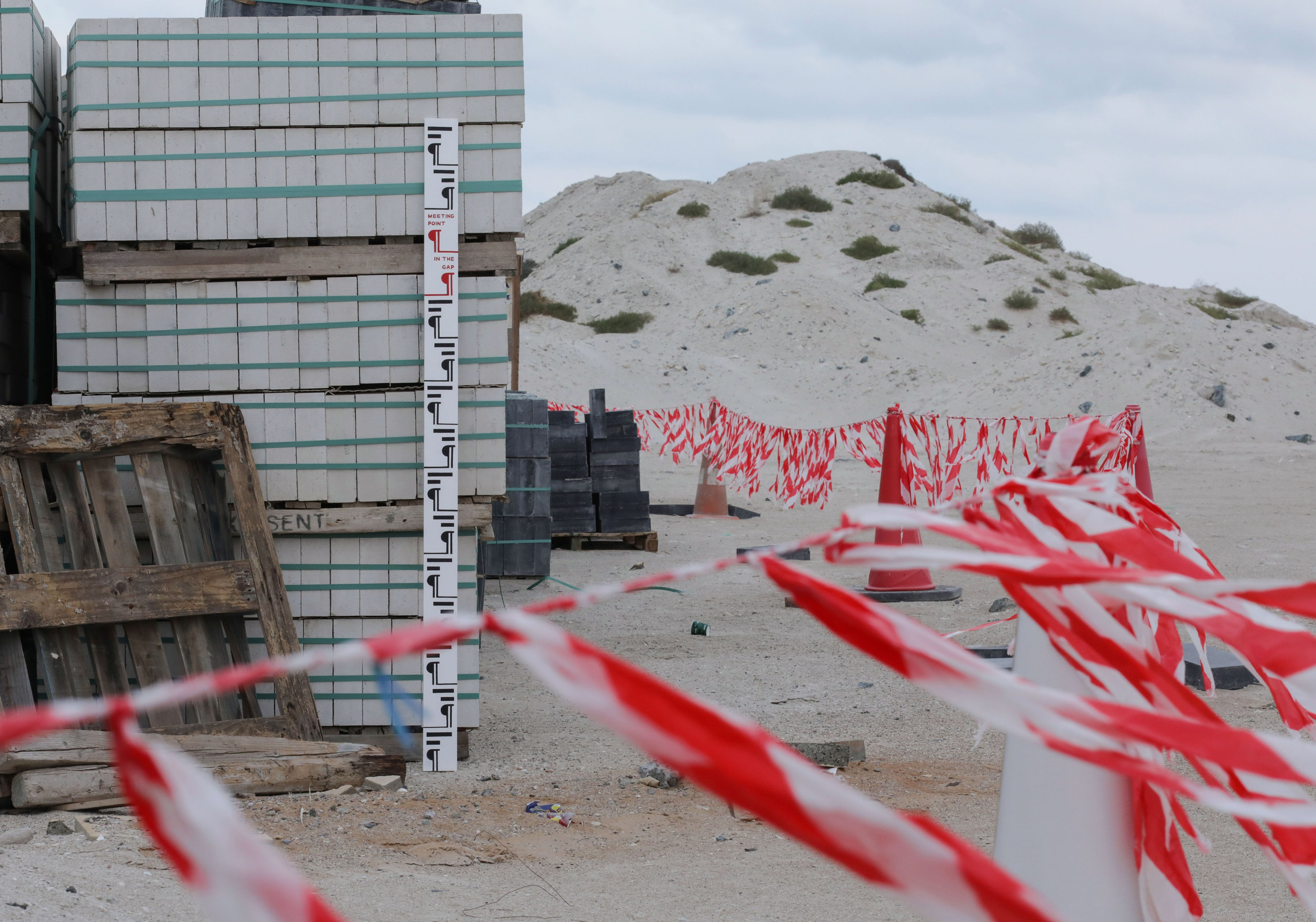
The intervention translates these ideas into the urban context where the landscape is approached as a grammatical field. Borrowing the visual language of surveying markers, the intervention inserts the phrase “meeting point in the gap” into a disused site. Functioning as both a note addressed to the space and a temporary marker of encounter, the gesture proposes the gap as a place of negotiation between conflicting positions, misrecognitions and competing systems of meaning.
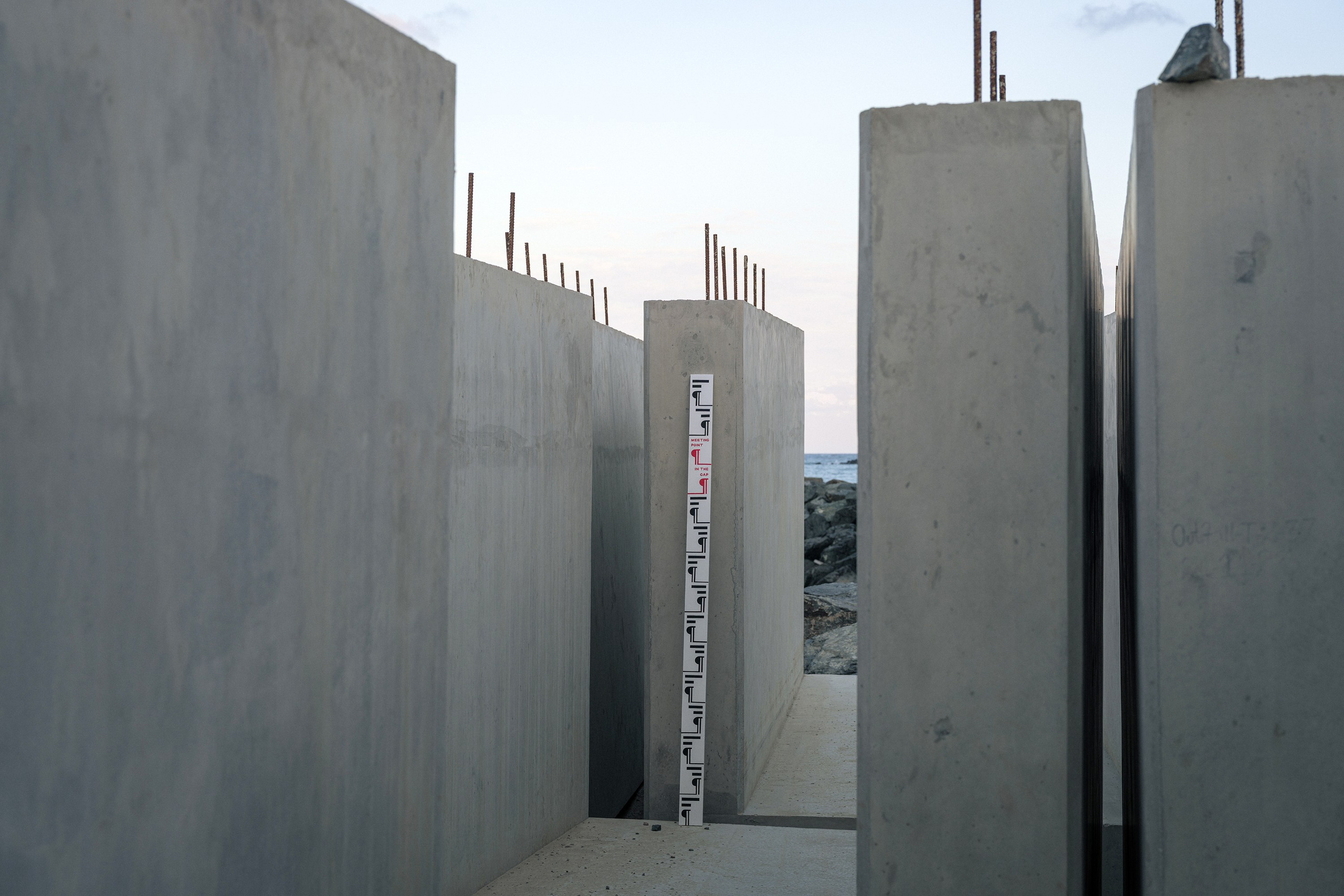
Photo — Danko Stjepanovic